Barnes Bridge florists for wedding bouquets
Posted on 24/09/2026
Barnes Bridge florists for wedding bouquets: a practical guide to choosing the right flowers for your day
If you are searching for Barnes Bridge florists for wedding bouquets, you are probably in that very real wedding stage where the details suddenly matter a lot. The bouquet has to suit the dress, the venue, the season, the photos, and, let's face it, the mood you want to feel when you walk down the aisle. Not a small job. The good news is that the right florist can make the process feel calm rather than chaotic, and the right bouquet can tie everything together without stealing the spotlight.
This guide walks through what to expect, how to choose with confidence, and how to avoid the usual wedding-flower headaches. You will find practical planning advice, style comparisons, a checklist, and a few grounded tips that help when the pressure is on and you just want the flowers to look lovely, fresh, and properly considered.
One small note before we begin: wedding flowers are partly creative and partly logistical. That mix is where good floristry really shows.
- Why Barnes Bridge florists for wedding bouquets matters
- How the process works
- Key benefits and practical advantages
- Who this is for and when it makes sense
- Step-by-step guidance
- Expert tips for better results
- Common mistakes to avoid
- Tools, resources and recommendations
- Law, compliance, standards, or best practice
- Options, methods, or comparison table
- Case study or real-world example
- Practical checklist
- Conclusion
- Frequently asked questions
Why Barnes Bridge florists for wedding bouquets Matters
Wedding bouquets are not just pretty accessories. They are part of the visual language of the day. In a good photo, the bouquet frames the bride, complements the setting, and quietly connects the dress, the bridesmaids, the buttonholes, and the ceremony flowers. In a less successful setup, the bouquet can feel disconnected, too bulky, too flat, or just a bit "off" in colour or scale. You know it when you see it.
Choosing Barnes Bridge florists for wedding bouquets matters because local florists bring practical awareness as well as design skill. They understand the kind of wedding timings that work in west London, the pace of deliveries, and the realities of fresh flowers in different seasons. That may sound basic, but in weddings, basic things become important very quickly. A bouquet needs to arrive on time, hold up through photographs, and still look elegant by the ceremony and beyond.
There is also a trust factor. Wedding flowers are personal. You are handing over a meaningful detail of one of the biggest days of your life, and you want someone who listens properly. A florist who takes the time to understand the dress fabric, bouquet shape, ceremony time, colour palette, and venue lighting is far more useful than someone simply offering a menu of flowers and hoping for the best.
If you are browsing nearby wedding options, it can help to look at a florist's wider wedding range too. For example, a collection like wedding flowers and collections can give you a clearer idea of their style consistency across bridal bouquets, bridesmaid flowers, and matching finishing touches.
Truth be told, the bouquet often becomes one of the most photographed items in the entire wedding. It appears in the close-up shots, the walking shots, the candid moments, and that one slightly emotional photo where everyone is pretending not to cry. So yes, it matters more than people sometimes admit at first.
How Barnes Bridge florists for wedding bouquets Works
The process usually starts with a conversation, not with a bouquet. That conversation should cover your wedding date, venue, style, colour preferences, budget range, and any flower dislikes or allergies. From there, the florist can guide you toward suitable flowers and bouquet shapes. It is a design process, but with logistics sitting underneath it the whole time.
Most wedding bouquet planning follows a fairly simple rhythm:
- Initial enquiry - You share your date, theme, and what you need.
- Style discussion - You talk about bouquet size, colour, structure, and seasonality.
- Flower selection - The florist suggests blooms that suit the look and timing.
- Quotation and confirmation - Costs, delivery, and any extras are agreed.
- Final planning - Details are checked closer to the wedding, especially if seasonal flowers or substitutions are involved.
- Preparation and delivery - The bouquet is made fresh and delivered in time for the event.
There is usually a balance between what you want and what works well in the season. For example, if you love a soft garden-style bouquet but your date falls in a period when some favoured blooms are less available, a good florist will suggest alternatives that preserve the feel rather than forcing an exact replica. That is often the smart move.
Many couples also choose linked arrangements so the bouquet feels part of a wider floral story. Matching bridesmaid bouquets, buttonholes, or table flowers create a sense of coherence. A florist offering items such as bridal bouquets, bridesmaid bouquets, and buttonholes can make that joining-up much easier.
The key thing is that the bouquet should not look like it was ordered in isolation five minutes before the ceremony. It should feel intentional. Thought through. Properly yours.
Key Benefits and Practical Advantages
Working with a florist for your wedding bouquet offers more than convenience. The benefits show up in the details, and weddings are basically made of details.
1. Better design fit
A florist can adapt the bouquet to the silhouette of the dress, the height of the bride, and the overall tone of the wedding. A smaller posy-style bouquet might feel right for a minimal civil ceremony, while a fuller hand-tied bouquet may suit a more traditional celebration. It is not about choosing the biggest option. It is about choosing the right one.
2. Seasonal flower knowledge
Seasonal selection usually means better freshness, a more natural look, and fewer last-minute compromises. Florists can explain when certain flowers are at their best and when a substitute may be wiser. That advice is genuinely useful, especially if you have fallen in love with a bloom that is not ideal for your date.
3. Coordination across the wedding
A bouquet does not live alone. It should work with the bridesmaids, the groom's buttonhole, table flowers, and the ceremony space. This kind of coordination can be subtle, but when it is done well, the whole day feels more polished. Not overdone. Just calm and cohesive.
4. Less stress on the wedding morning
Wedding mornings have a habit of becoming busier than expected. Having a florist manage the making and delivery of your bouquet removes one more thing from the list. And honestly, on a day when you might already be fielding questions about pins, shoes, and missing confetti, that matters.
5. Better handling and presentation
Fresh wedding flowers need proper conditioning, water storage, careful transport, and sensible timing. A florist is set up for that. The bouquet should arrive ready to hold, photograph, and carry comfortably. Not limp. Not awkward. Not looking like it had a rough journey across town.
| Option | Best for | Pros | Watch-outs |
|---|---|---|---|
| Simple hand-tied bouquet | Classic, relaxed weddings | Natural look, easy to carry, versatile | Can feel too understated if the dress is highly detailed |
| Posy bouquet | Smaller ceremonies, petite brides, bridesmaids | Lightweight, neat, elegant | May appear small in large venues or wide-angle photos |
| Cascade bouquet | Formal or dramatic styling | Striking, elegant in photos | Heavier, needs confident handling |
| Wild garden bouquet | Romantic, seasonal weddings | Soft texture, relaxed charm | Needs careful design to avoid looking messy |
To be fair, the "best" bouquet is the one that looks like it belongs in your wedding rather than in someone else's mood board.
Who This Is For and When It Makes Sense
Not every couple needs the same floral approach. Barnes Bridge florists for wedding bouquets make the most sense if you want a bouquet that is designed, not improvised. That includes a lot of people, especially when the wedding has more than one moving part.
This is a good fit if you are:
- planning a local or west London wedding and want a florist who understands timing and delivery realities
- looking for a bouquet that matches a specific colour palette or dress style
- choosing flowers for a ceremony, reception, and bridal party as a coordinated set
- working with a budget but still want something elegant and polished
- not sure which flowers are in season and want grounded advice
- trying to keep the morning as calm as possible
It also makes sense if you are not a "flower person" in the first place. That is more common than people think. Some couples know exactly what they want. Others just know they want it to look good and feel right. If that is you, a florist can do the heavy lifting and translate a vague mood into a proper bouquet. Which is a relief, really.
Small weddings, registry office ceremonies, marquee receptions, church weddings, and intimate garden celebrations can all benefit from tailored bouquet design. Even a simple arrangement can become memorable when the scale and colour are right.
And if your wedding flowers need to sit alongside other gifting or occasion flowers during the planning period, browsing products such as luxury flowers or florist's choice arrangements can help you judge the florist's overall style and quality.
Step-by-Step Guidance
If you want the process to feel manageable, follow a simple sequence. Not fancy. Just sensible.
Step 1: Decide the bouquet role
Ask what the bouquet needs to do. Should it be soft and romantic? Bold and modern? Small and understated? The answer shapes everything that follows. A bouquet that is meant for dramatic photos will be designed differently from one that simply needs to sit comfortably in the hand during a short civil ceremony.
Step 2: Set a realistic budget
Budget affects flower choice, size, complexity, and whether you add extras. It is better to be upfront early than to back into a design that becomes awkward to price. A florist can often suggest ways to keep the bouquet elegant without overspending, such as using fewer premium stems and more well-chosen supporting flowers.
Step 3: Choose a style direction
Think in style terms rather than flower names if you are unsure. Words like classic, garden-inspired, modern, luxurious, or natural are useful starting points. They help a florist read the overall vibe before discussing specific stems.
Step 4: Consider seasonality
Seasonal flowers are usually easier to source and often look fresher. If you have dream flowers that are not naturally in season, ask whether they can be used as accent flowers rather than the entire structure. That gives the bouquet a better chance of looking balanced and natural.
Step 5: Bring visual references, but don't overdo it
A few images help. Twenty-seven screenshots can become a bit much. Pick references that show shape, texture, and colour. One photo might be useful for the bouquet form, another for the palette, and another for overall mood. The florist can then interpret the common thread.
Step 6: Confirm logistics early
Check delivery time, who will receive the bouquet, where it will be stored briefly if needed, and what happens if there is a delay. These are not glamorous details, but they are the ones that prevent awkwardness on the day.
Step 7: Review the final plan
Before the wedding, confirm the bouquet size, ribbon colour, stem wrap, and any matching pieces. If you are ordering items like wedding corsages or table arrangements, make sure the design family still feels consistent. That final review is often where the small but useful decisions happen.
And then, on the day, let it be. Once the bouquet is in your hands, the job is done.
Expert Tips for Better Results
A few practical habits can make a surprisingly big difference to the final bouquet.
- Think in textures as well as colours. Soft petals, airy filler, glossy leaves, and structured blooms create depth. A bouquet with only one texture can look flat in person and on camera.
- Choose one clear focal point. A bouquet should have a visual centre. If every flower is shouting, nothing feels settled.
- Match the bouquet to the dress detail. Busy lace may work better with a cleaner bouquet. A minimalist dress can carry a more textured arrangement.
- Ask about stem length. The bouquet should feel comfortable to hold for photos, vows, and movement.
- Account for the weather. Warm conditions, direct sun, and transport all matter. London can surprise you. One minute grey drizzle, the next minute the bouquet is in sunshine and everyone is squinting.
- Keep fragrance in mind. Some flowers smell lovely but can be strong indoors or in close-up photos. Sensitivity varies, so it is worth asking.
One useful trick: if you are torn between two bouquet styles, ask which one works better with your venue lighting and photography. That question often cuts through the noise. A bouquet can look very different in a bright conservatory compared with a candlelit evening room.
You may also want to explore coordinated ranges if you are aiming for a smoother look across the day. A bouquet paired with matching wedding collections such as a wedding collection can save decision fatigue and reduce the risk of design clashes.
Common Mistakes to Avoid
Wedding bouquet mistakes are usually not dramatic disasters. More often, they are small mismatches that become obvious in hindsight.
Choosing flowers only by name
People often fall in love with a flower in isolation, but bouquets are about combinations. A bloom that looks perfect on its own might not suit the scale, season, or colour story of the whole arrangement.
Ignoring bouquet weight
A heavy bouquet can become tiring to carry, especially during longer ceremonies or photo sessions. It is worth checking that the arrangement is balanced and practical, not just beautiful.
Leaving the order too late
The earlier you speak to a florist, the more options you usually have. Better planning also gives time for sourcing and adjustments. Leaving things to the last minute can push you into whatever is easiest, not what is best.
Forgetting the wider wedding palette
The bouquet should fit the whole setting. If the bridesmaids, venue styling, and dress tone are ignored, the result can feel disconnected. Not awful. Just slightly off.
Assuming all flowers behave the same way
Some flowers are naturally hardier than others. Some open up more after conditioning. Some are more delicate in heat. A florist should be able to explain these differences clearly, without drowning you in jargon.
Overcomplicating the brief
Too many must-haves can create a bouquet that tries to do everything and ends up doing nothing especially well. A simple, focused brief often produces the strongest result.
One slightly funny truth: sometimes the "I know exactly what I want" bouquet and the "I'm open to ideas" bouquet end up looking very similar once the florist has done the translating. That is not a bad thing.
Tools, Resources and Recommendations
You do not need specialist software to plan wedding flowers, but a few practical tools help.
- A simple mood board. Use saved images to show style, not just flower types.
- Venue photos. Share a few current images of the ceremony and reception space if you have them.
- Colour notes. Write down dress shades, suit colours, and any fabric tones that matter.
- Measure your timeline. Keep a note of ceremony time, photographer arrival, and travel windows.
- Questions list. Bring a short list of practical questions so nothing important is missed.
It can also help to look through matching bouquet and accessory categories when shaping your brief. For example, if you like a romantic and classic feel, bridal pieces such as pure romance bridal bouquet and coordinated items like white-themed wedding collections can help you narrow down the visual direction.
If sustainability matters to you, ask your florist what they do to reduce waste, how they source flowers, and whether they can advise on reuse for the reception or home afterwards. Not every wedding flower can be fully repurposed, of course, but a thoughtful florist should still be able to suggest sensible options.
For ongoing flower care after the wedding, a basic care guide is useful too, especially if you want the bouquet to last longer for photos or keep a few stems as a small memory.
Law, Compliance, Standards, or Best Practice
Wedding floristry is not heavily regulated in the same way as some trades, but there are still important standards and best practices to keep in mind. A professional florist should handle flowers in a clean, safe, and sensible way, especially when delivering on a busy wedding day.
Best practice usually includes:
- clear written confirmation of what is being supplied
- transparent pricing and delivery arrangements
- reasonable notice for changes or substitutions
- careful handling of fresh flowers during transport
- appropriate communication if a product becomes unavailable
If flowers are being delivered to a venue, timing matters. So does access. It is sensible to confirm entrance details, parking constraints, and who will receive the flowers. These are small things, but they prevent the sort of delay that can set nerves jangling first thing in the morning.
There are also some common industry norms worth knowing. Seasonal substitutions are normal in floristry if a chosen bloom is unavailable. That does not mean the florist has not delivered properly. It usually means they are protecting the overall quality of the bouquet. You should, however, expect them to keep the look and value aligned with what was agreed.
If you are reviewing policies such as refunds, delivery, or privacy, those should be explained clearly on the florist's website or in their order terms. You do not need a law degree to order flowers. You just need clear information and a business that communicates well.
Options, Methods, or Comparison Table
There are several ways to approach wedding bouquets, and each works better in different situations. A quick comparison can help if you are deciding between a bespoke floral brief, a collection-led order, or a simpler ready-made style.
| Approach | Best for | Pros | Cons |
|---|---|---|---|
| Bespoke bouquet brief | Couples with a clear vision | Most personal, tailored to dress and venue | Takes more discussion and planning |
| Collection-led wedding flowers | Couples who want a coordinated look quickly | Easy to match across bouquet, bridesmaids, and extras | Less flexible than fully bespoke design |
| Florist's choice bouquet | Those open to expert interpretation | Often efficient, may offer strong value | Less control over specific flowers |
| Minimalist bouquet | Small ceremonies and understated style | Clean, elegant, usually practical | Can look too simple if other elements are highly decorative |
If you are unsure, a hybrid approach often works best: give the florist a clear palette, a few preferred flowers, and a sense of scale, then allow them room to compose the bouquet properly. That tends to produce something more natural than a rigid instruction list.
Case Study or Real-World Example
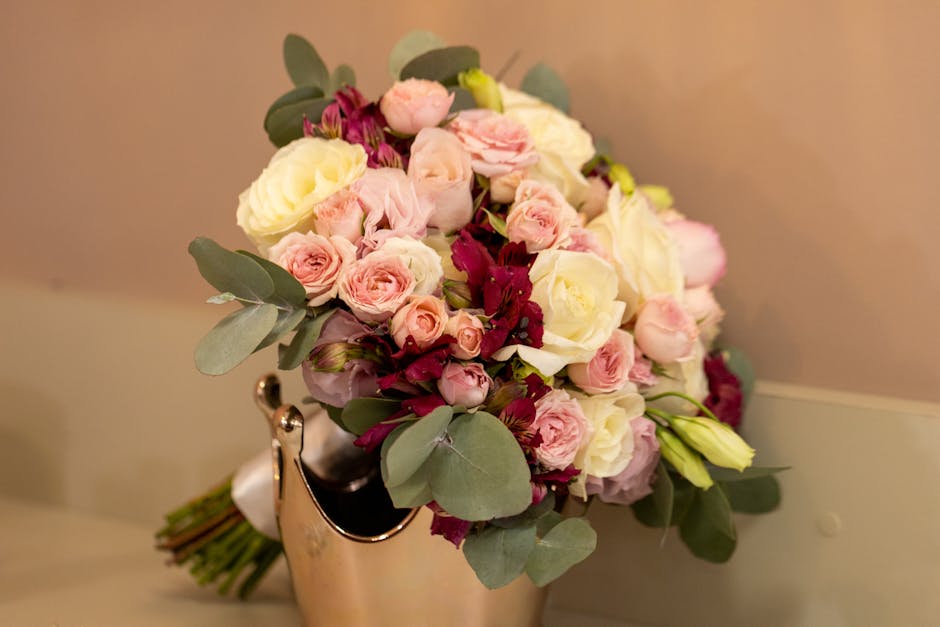
A couple planning a small west London ceremony wanted a bouquet that felt romantic but not overblown. The bride liked white and soft blush tones, but she did not want the bouquet to disappear in photos. The florist suggested a hand-tied style with roses, lisianthus, and delicate supporting flowers, keeping the shape loose but structured enough to show detail from the front.
The key decision was not the flowers alone. It was the balance. The bouquet needed to work with a simple dress, a modest ceremony space, and a short walk to the reception. The florist also coordinated buttonholes and a smaller bridesmaid bouquet, so the whole wedding party looked connected without being identical.
What made the outcome work was a realistic brief. No complicated last-minute changes, no chasing impossible flower varieties, and no mismatch between style and setting. Just a clear idea, a sensible plan, and a florist who understood the day.
That is usually how good wedding flowers happen. Not magic. Good communication, a steady hand, and a bit of trust.
Practical Checklist
Use this checklist before confirming your bouquet order:
- Have you shared your wedding date and venue details?
- Have you set a realistic budget range?
- Do you know whether you want a classic, romantic, modern, or natural style?
- Have you decided on your main colours?
- Have you checked whether your favourite flowers are in season?
- Have you confirmed bouquet size and comfort in hand?
- Have you asked about matching bridesmaid, buttonhole, or table flowers?
- Have you discussed delivery time and the name of the person receiving the flowers?
- Have you clarified substitution policy in case a stem is unavailable?
- Have you asked how the bouquet will be conditioned and transported?
- Have you reviewed any terms around payment, refunds, or changes?
- Have you kept a reference image for the overall style?
If you can tick most of those off, you are in good shape. A wedding bouquet does not need to be complicated to be beautiful. It just needs to be properly planned.
Practical summary: the best Barnes Bridge florists for wedding bouquets combine design judgement, seasonal knowledge, clear communication, and reliable delivery. That is the sweet spot. It is what turns a nice idea into a bouquet that feels right in the room, in the photographs, and in the memory afterwards.
Get a free quote today and see how much you can save.
Conclusion
Choosing Barnes Bridge florists for wedding bouquets is really about choosing peace of mind as much as petals. The right florist helps you shape a bouquet that suits your dress, your venue, your timing, and your own taste without making the process feel heavy. That is worth a lot on a wedding week, especially when everything else seems to be arriving in lists, messages, and sudden questions.
If you keep the brief clear, think seasonally, and pay attention to fit rather than just flower names, you give yourself a much better chance of loving the result. And honestly, that is the goal. A bouquet should feel like the moment, not like a compromise. A small thing, yes. But a very visible small thing.
When the flowers are right, the whole day tends to breathe a little easier. And that is no bad thing.
Frequently Asked Questions
How far in advance should I book a wedding bouquet florist?
As early as you can, especially if your date falls in a busy wedding season. Early booking gives you more choice, more time to refine the style, and less pressure if you want matching pieces for bridesmaids or buttonholes.
Can I ask for specific flowers in my bouquet?
Yes, but it helps to stay open to alternatives if a flower is out of season or hard to source. A good florist will usually keep the same style and feeling even if one or two stems need to change.
What is the difference between a bridal bouquet and a bridesmaid bouquet?
A bridal bouquet is usually more detailed, slightly larger, and designed to stand out in photos. Bridesmaid bouquets are often smaller or simpler, but they should still complement the main bouquet rather than compete with it.
How do I know which bouquet style suits my dress?
Think about balance. A detailed dress often works well with a more controlled bouquet, while a plain or minimalist dress can carry a fuller, more textured design. If in doubt, show your florist photos of the dress.
Are seasonal flowers better for wedding bouquets?
Usually, yes. They tend to be fresher, easier to source, and more naturally suited to the time of year. Seasonal choices can also help keep costs and expectations more manageable.
Can Barnes Bridge florists also provide matching wedding flowers?
Often, yes. Many florists can coordinate bridesmaid bouquets, buttonholes, table flowers, and other wedding pieces so the whole event has a consistent look.
What if I do not know much about flowers?
That is completely fine. Many couples start with only a colour palette or a vague mood. A good florist should be able to guide you through the choices in plain English and help you narrow things down.
How much should I expect to spend on a wedding bouquet?
There is no single correct figure because it depends on size, flower types, season, and design complexity. It is best to ask for a quote based on your exact brief rather than guessing from a general price online.
Can my bouquet be made to match my wedding theme?
Yes. Whether your theme is romantic, rustic, modern, classic, or relaxed, the florist can usually adapt the shape, colour, and texture to fit. The more clearly you describe the mood, the better.
Do I need to worry about bouquet delivery on the wedding day?
Yes, but only in a practical sense. Confirm the delivery time, access details, and who will take receipt of the flowers. Good planning here stops a lot of avoidable stress.
What should I bring to my florist consultation?
Bring your wedding date, venue details, colour ideas, dress inspiration, and any flowers you like or dislike. A small set of references is enough. More than that can become confusing, even for the florist.
Can I reuse my bouquet after the ceremony?
Sometimes, yes. Some couples keep it for photographs, repurpose it for the reception, or take stems home afterwards. Ask the florist how best to keep it looking fresh for as long as possible.
When all is said and done, the best bouquet is the one that feels effortless on the day and still makes sense when you look back at the photos years later. That quiet kind of beauty lasts.